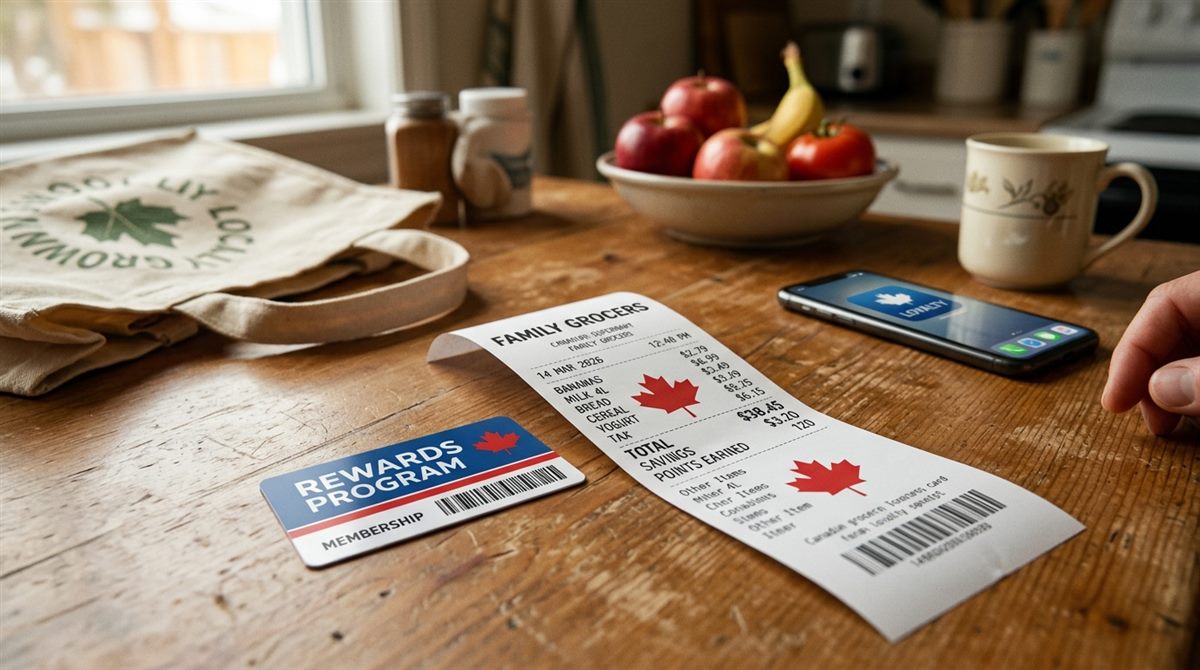
For Best Canadian Rewards Apps for Everyday Shopping in 2026, start at the kitchen table rather than the promotion page. Someone in Surrey checking a renewal email before the school run needs plain terms, a final price, and a way to prove the benefit later.
Start with the actual errand
Start by writing what would happen with no offer at all. That baseline keeps best canadian rewards apps for everyday shopping in 2026 from becoming an excuse for extra spending.
Proof beats optimism
Cashback, points, and trial discounts all feel simple until the claim window closes. Record the activation step, the qualified item, the expected date, and the rule that would cancel the benefit.
The point is not paperwork for its own sake. It is making the offer understandable after the excitement has worn off.
The fridge-door version
If this had to be written on one note, it would include the store or service, the final cost, the expected reward, and the date to cancel, claim, or check the account.
- What was already needed?
- What changed because of the offer?
- Where is the proof?
- When should the household review it?
Where rewards apps stop being everyday tools
An app is less useful when it only works at rare stores, pushes constant notifications, or makes the household change baskets to chase points. Everyday value should show up without a complicated routine.
A useful yes
Say yes when the offer improves a routine purchase, the proof is simple, the return or cancellation path is visible, and the final cost still beats the simpler path.
Competition and price reality
A percentage discount is only useful after the normal price is believable. Look at recent prices, unit cost, shipping, required bundles, minimum spend, and whether the same merchant often repeats the promotion.
The Competition Bureau Canada is a useful public reference when a reader wants to understand advertising claims, urgency language, or price-presentation issues. HappyLinkers uses that mindset without pretending to investigate every retailer.
What would make this guide weaker
The guide should be revised if it starts sounding like every offer is worth activating. A mature savings site has to say no when the terms are unclear, the account access is disproportionate, the saving depends on buying extra, or a simpler merchant produces the same result with less work.
It should also be updated when a program changes payout timing, expiry rules, shipping thresholds, app permissions, or cancellation steps. Those details decide whether an older article still helps a reader.
Competition and price reality
A percentage discount is only useful after the normal price is believable. Look at recent prices, unit cost, shipping, required bundles, minimum spend, and whether the same merchant often repeats the promotion.
The Competition Bureau Canada is a useful public reference when a reader wants to understand advertising claims, urgency language, or price-presentation issues. HappyLinkers uses that mindset without pretending to investigate every retailer.
What would make this guide weaker
The guide should be revised if it starts sounding like every offer is worth activating. A mature savings site has to say no when the terms are unclear, the account access is disproportionate, the saving depends on buying extra, or a simpler merchant produces the same result with less work.
It should also be updated when a program changes payout timing, expiry rules, shipping thresholds, app permissions, or cancellation steps. Those details decide whether an older article still helps a reader.
The correction file
Offers change quietly. Payout thresholds move, app permissions expand, return policies narrow, and trial pages become harder to cancel. A reader-friendly article should make those possible changes visible instead of pretending the terms are permanent.
Keep a correction trail: the date checked, the merchant or program name, the official page reviewed, and the practical detail that would change the advice. That makes later edits credible and gives affiliate managers a reason to trust the publication.
If a reader sends a correction, the response should not be defensive. The right question is simple: did the page still help someone make a careful decision today?
The anti-overbuying rule
Many promotions are designed to make the reader add one more item, upgrade one more tier, or keep one more account. The article should name that pressure and give the reader permission to stop before the cart changes shape.
For groceries, that means checking unit price and spoilage. For subscriptions, it means checking renewal dates and unused seats. For cashback, it means comparing the payout delay with the size of the reward.
A real editorial site earns trust by reducing unnecessary action. If the reader leaves with fewer tabs open and a clearer rule, the article has done its job.
Before the click
Keep the program useful by checking the ordinary purchase first, then the points. The order matters.
If that sentence feels hard to complete, the offer is not ready. The calmer move is to keep the normal purchase path, wait for clearer terms, or choose the merchant that makes returns, cancellation, and support easier.
This is also the reader value of the page. It answers the practical uncertainty around a deal, not just the advertiser name. Readers come back to sites that help them avoid small regrets.
Link note
Partner links help support the site, but they are not the reason to act. Use the official terms, your own receipt, and the household calendar before deciding.