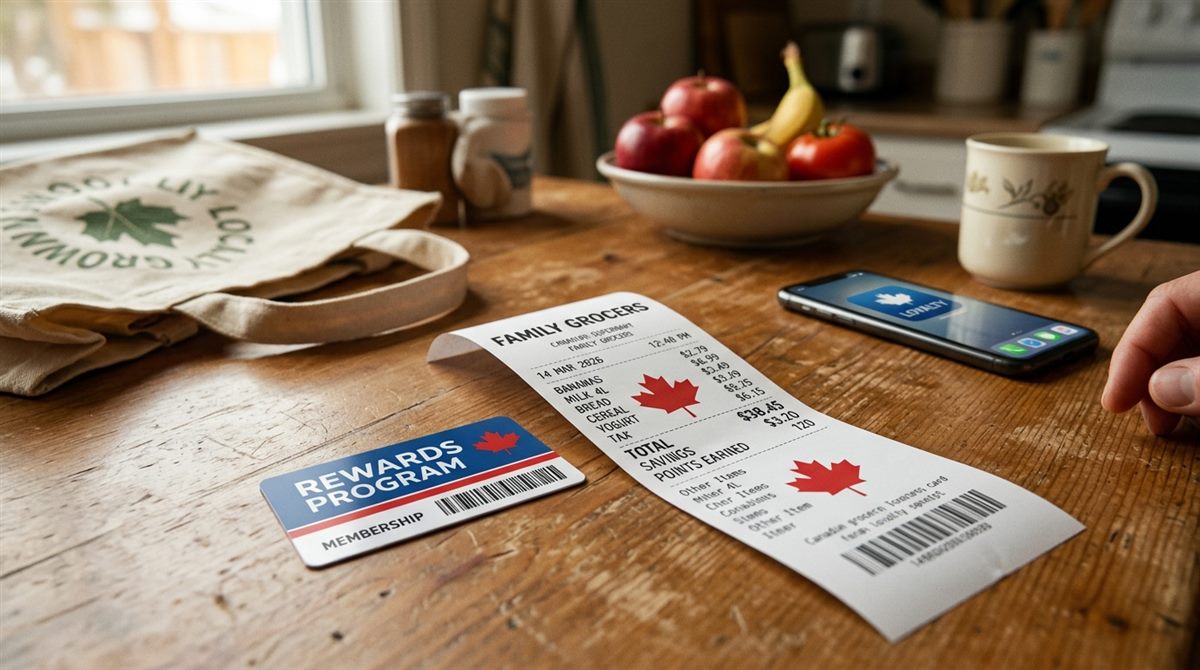
Rewards
Best Canadian Rewards Apps for Everyday Shopping in 2026
Rewards apps can help with groceries, pharmacy trips, fuel, and restaurant bills, but only if the points fit places you already shop.
Choose a category and stay inside that topic. Rewards contains rewards articles; cashback contains cashback articles; subscriptions contains subscription articles; shopping contains practical shopping articles.
20 articles about points, loyalty apps, retail rewards, grocery points, drugstore promos, travel points used close to home.
Rewards apps can help with groceries, pharmacy trips, fuel, and restaurant bills, but only if the points fit places you already shop.

A quiet calendar reminder can save more value than chasing another bonus you will forget to redeem.

Weekend travel is where points often become practical: short flights, train trips, hotels near family, and flexible cancellation rules.

A rewards plan should follow your grocery list, not rewrite it around points.

Bonus points at Canadian pharmacies can be useful, but the good days are usually narrow.

Fuel rewards work best when the station is already on your route.

A 20x points event can look exciting until you compare it with a plain sale price.

Shared points can work, but only if everyone understands redemptions and receipts.

Students do not need every app. They need two or three that match campus spending.

Newcomers see loyalty prompts everywhere. This guide separates useful cards from clutter.

Some bonuses quietly ask you to buy more than you planned.

The safest redemption is often boring: groceries, pharmacy basics, or travel you already planned.

Daily coffee points only matter if the chain is already part of your week.

Holiday offers can help with planned gifts, but they also push overbuying.

Points are not the only reason to keep receipts. Returns and warranty claims matter more.

Rewards accounts collect purchase data. Check settings before you chase points.

Tiny balances can still cover basics if you know where to look.

Not every multiplier deserves attention. Start with expiry, category, and minimum spend.

Domestic travel needs a different points strategy than aspirational long-haul redemptions.

A smaller wallet usually means fewer missed redemptions and fewer privacy tradeoffs.
20 articles about cashback portals, card-linked offers, receipt apps, payout rules, stacking without overbuying.

The best cashback stack is the one that starts with something you already needed.

Freelancers can use cashback tools, but bookkeeping and clean receipts matter more than tiny rebates.

Coupon extensions can save time, but they also sit close to your shopping behaviour.

Receipt apps are only useful if the payout clears and the privacy trade feels acceptable.

Card-linked offers are easy to miss because they usually need activation before purchase.

Portal cashback sometimes fails. A few screenshots can protect your claim.

A code from the wrong source can wipe out a better cashback rate.

A generous rate means little if the payout threshold is too high for your spending.

Pet supplies repeat monthly, which makes them better suited to quiet cashback habits.

Back-to-school cashback should follow the list from the teacher, not the promo banner.

A higher rebate does not help if the shipping fee eats it.

Most cashback disappears after a return, and partial refunds can be messy.

Shared households need a simple rule for who uploads receipts and who gets the payout.

The biggest rebate is not always the best deal if the item was marked up first.

Annual software renewals are a good time to check portals, but not a reason to renew early.

Category rebates can help, but they should not push you away from cheaper staples.

Business purchases need cleaner notes than personal shopping.

Pending cashback is not cash. Treat it as a later rebate, not a discount today.

Some tools are low effort, but low effort often means lower rates and less control.

Card-linked cashback is convenient. The privacy trade deserves a two-minute check.
21 articles about software, streaming, phone plans, family accounts, renewals, trials, bundles, cancellation habits, and renewal discipline.

A family can usually find savings by checking renewals, unused seats, duplicate storage, and old trials.

Home offices need reliable tools, not every premium bundle that appears in search results.

A cheaper phone plan often comes from timing and keeping the device longer.

Rotating services is dull but effective when every platform wants to become permanent.

Storage upgrades should start with cleanup and shared folders, not panic-buying space.

Trials are not free if nobody owns the reminder.

Renewal notices often hide price changes, seat counts, and cancellation windows.

A password manager can be worth paying for if it replaces unsafe shared notes.

Temporary internet plans need a different checklist than home service.

Students often have campus access that beats a consumer subscription.

Cost sharing needs a rule before the bill arrives.

Annual billing can save money but removes flexibility.

A bad cancellation path is a warning sign, even when the intro price looks good.

A VPN is not a magic privacy shield. Buy it only for a clear use case.

Learning subscriptions pile up because they feel productive even when unused.

Camera and alarm plans need a practical review before the trial quietly converts.

Many forgotten subscriptions live inside app stores, not email inboxes.
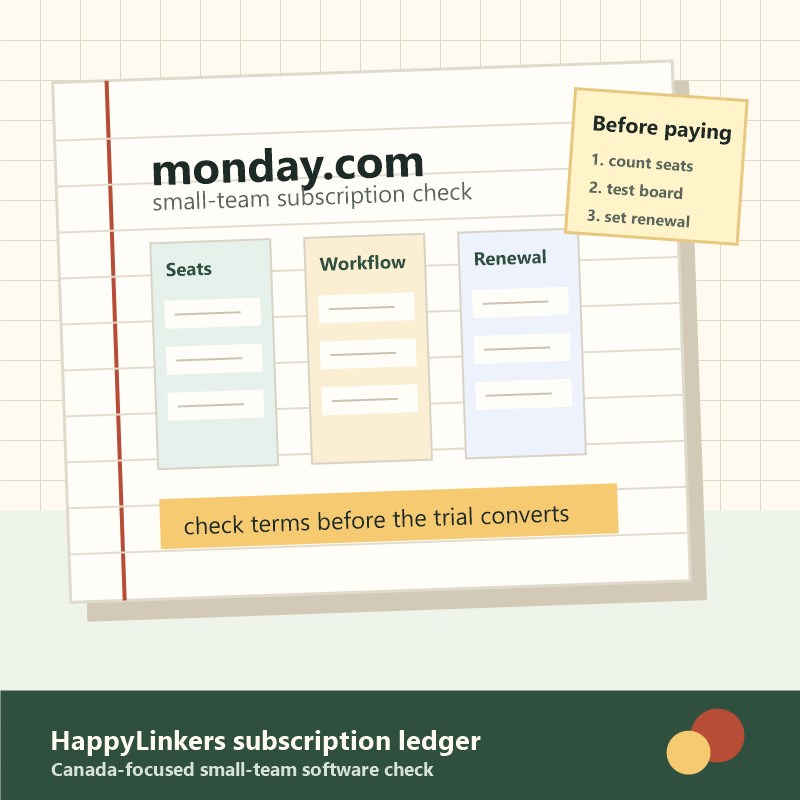
Seat count, workflow ownership, automations, and renewal checks before adding another paid work management tool.

Small teams should review seats before adding another tool.

Downgrading often keeps the useful part while removing expensive extras.

A few saved emails can make refund requests less painful.
20 articles about groceries, price matching, browser coupons, resale, student shopping, newcomer buying basics, and return decisions.

Price matching depends on store rules, local flyers, and whether the effort is worth your time.

Student budgets need simple repeatable tools, not ten dashboards.

A useful affiliate recommendation explains the tradeoff, not just the commission link.

Pay-in-four is still debt. Use it only when the timing problem is real and short.

Resale can cut costs, but pickup time and item condition matter.

The first month is full of purchases. A short list prevents duplicate spending.

School shopping works best from a fixed list and a spending ceiling.

Winter gear is expensive, but cheap mistakes can be worse.

Not every sale is urgent. Delivery, warranty, and return rules matter.

Unit pricing beats most shelf tags once package sizes start shrinking.

Intro offers can help during busy weeks, but the regular price needs checking.

Recurring pet orders are convenient, but local sales may beat them.

Bulk buying can waste money when storage and expiry are ignored.

Good gift planning includes return windows and gift receipts.

A price book sounds old-fashioned, but it beats guessing.

A low-effort coupon routine can still catch the obvious savings.

Savings do not matter if the pickup feels unsafe or the product is misrepresented.

Convenience packs cost more. A few repeatable staples can cut the markup.

Membership math should use your real basket, not the store's best-case example.

A cheap online price can become expensive if returns are difficult.